
Do you sometimes feel overwhelmed by people issues? It is not uncommon in a small business, but I often point back to a concept I learned early in my consulting career. It was from Dr. W. Edwards Deming, and it really hits home.
“Eighty-five percent of the reasons for failure are deficiencies in the systems and processes rather than the employee. The role of management is to change the process rather than badgering individuals to do better.”
“The worker is not the problem. The system is the problem. If you want to improve performance, you must work on the system.” – Dr. W. Edwards Deming
That is powerful. Now, people can still be the problem, but if you eliminate the majority of process issues, then whether you have a “people issue” is much more apparent.
Are your business processes healthy? Use this checklist.
The goal as the leader is to get people engaged in looking at their processes and taking ownership. Below is a quick checklist of things to consider.
- Does every team member really know what they are responsible for? Do they know the outcome of their role and what excellent looks like?
- Are their processes clear?
- Have they been trained in these processes?
- Are processes accessible so that if there is a question, they can go to a reference?
- Do they get feedback on how well they complete the process, and are they coached to improve?
- Does the team consistently follow these processes?
- Does the department get feedback and make changes to processes when things aren’t working correctly, or do they just make the same mistakes?
Sometimes the people are not the right fit, which points back to your hiring process, but if you work through the list above you can eliminate a lot of the issues.
Action Steps
Want to talk about increasing consistency of processes or role ownership? Reach out for an initial call.
Read the book: Out of the Crisis, Dr. W. Edwards Deming
Extra Credit
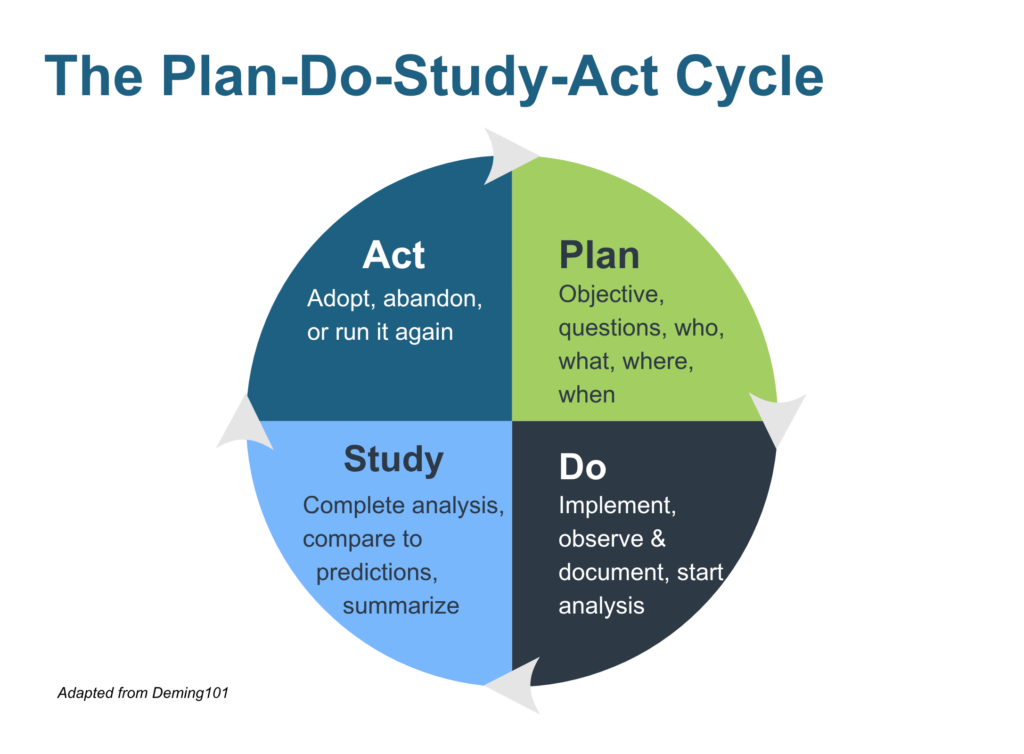
Check out Deming’s system for process improvement, the Plan-Do-Study-Act Cycle, which evolved from his seminal Plan-Do-Check-Act Cycle. Learn more at Deming.org.